What to expect.
The process.
Your first appointment is an opportunity to explore your health in depth and begin the process of change. Traditional acupuncture sees the body and mind as interconnected, so we’ll discuss your main concerns along with aspects such as sleep, digestion and emotional well-being – which may seem unrelated but help me to understand how your system is functioning as a whole.
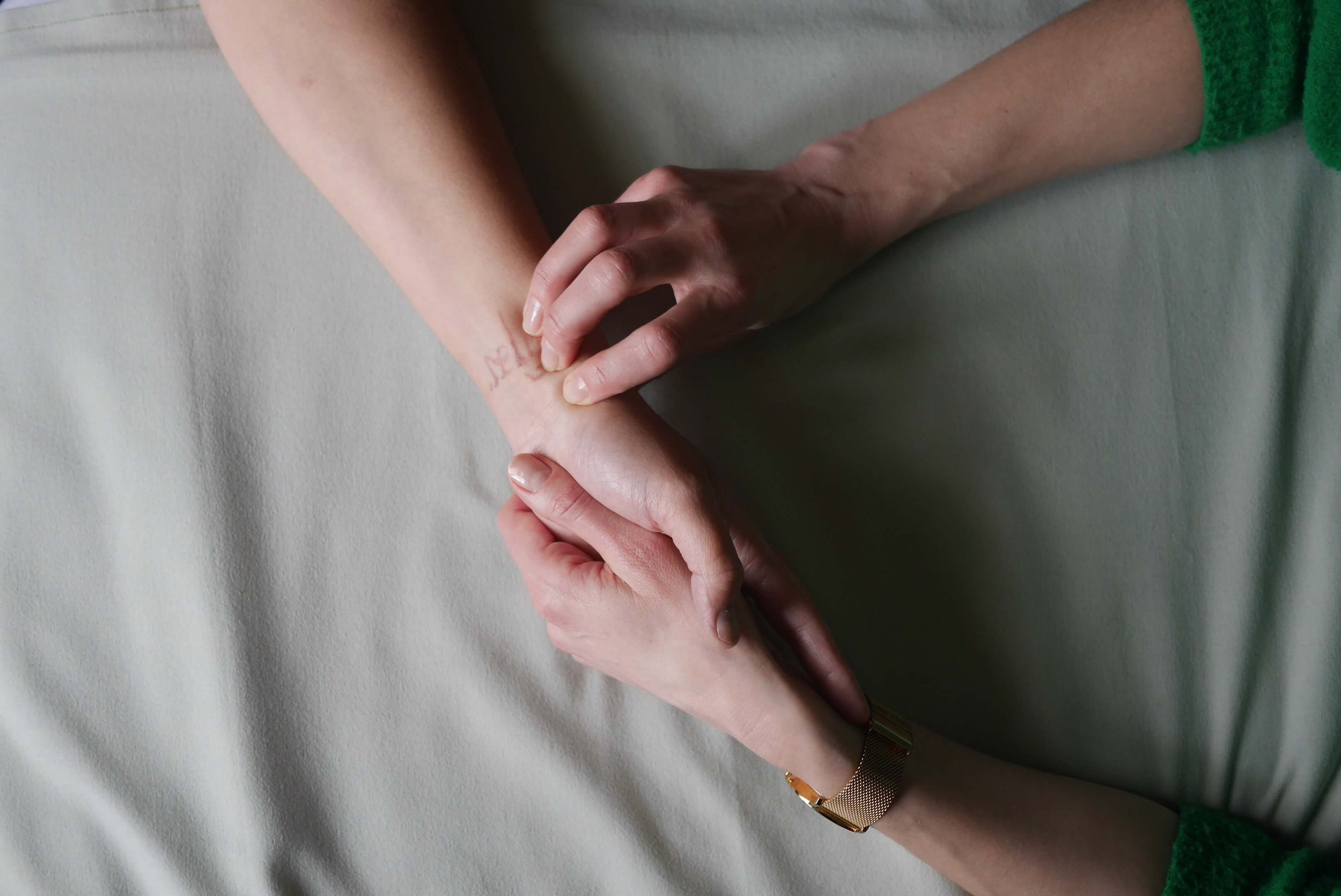
I’ll take your pulse and observe your tongue, key diagnostic tools that offer insight into your body’s internal state. Once you’re comfortable on the treatment table, I’ll explain my approach and gently insert the needles. I often incorporate Tui Na (Chinese medical massage) techniques to activate specific points and channels, helping to bring your Qi into balance. Other modalities may also be used, all of which you can learn about below.
As the needles remain in place, you’ll have time to rest while your body responds to the treatment. Many people feel deeply relaxed or notice subtle shifts in awareness.
At the end of the session, I’ll remove the needles, and we’ll review any observations, recommendations and changes to consider between sessions. I may share ideas related to Yang Sheng or ‘nurturing life’ – a practice that supports balance, vitality and longevity through lifestyle, diet and movement.
Acupuncture is cumulative, with each session building on the previous one. It works best as a collaborative process, typically involving a series of treatments. We’ll agree on a plan and adjust it as needed.

ancillary techniques.
Depending on your health and needs, and with consent, the following additional techniques or tools may be used in the course of your treatments.
-
Tui Na, the world’s oldest form of bodywork, uses skilled hand movements to regulate the flow of Qi and Blood, unblock meridians and address imbalances. It is highly effective in calming the nervous system before needling and can support a wide range of health conditions. This technique is typically applied over a Tui Na cloth, though it is sometimes used directly on the skin.
-
Moxibustion, or "moxa," involves burning dried mugwort (a herb used medicinally for thousands of years) on or near acupuncture points to warm and stimulate Qi. This technique dispels Cold, improves circulation and strengthens Yang energy. It is commonly used to relieve pain, boost immunity, and support digestive and reproductive health.
-
Fire cupping is a traditional therapeutic technique that involves placing heated glass cups on the skin to create suction. This process promotes circulation by increasing blood flow to the area being treated, helping to relieve muscle tension, expel pathogens, remove toxins, and invigorate Qi for improved health. The marks left by the cups are a normal result of the suction, indicating areas where stagnation has been released, gradually fading after a few days.
-
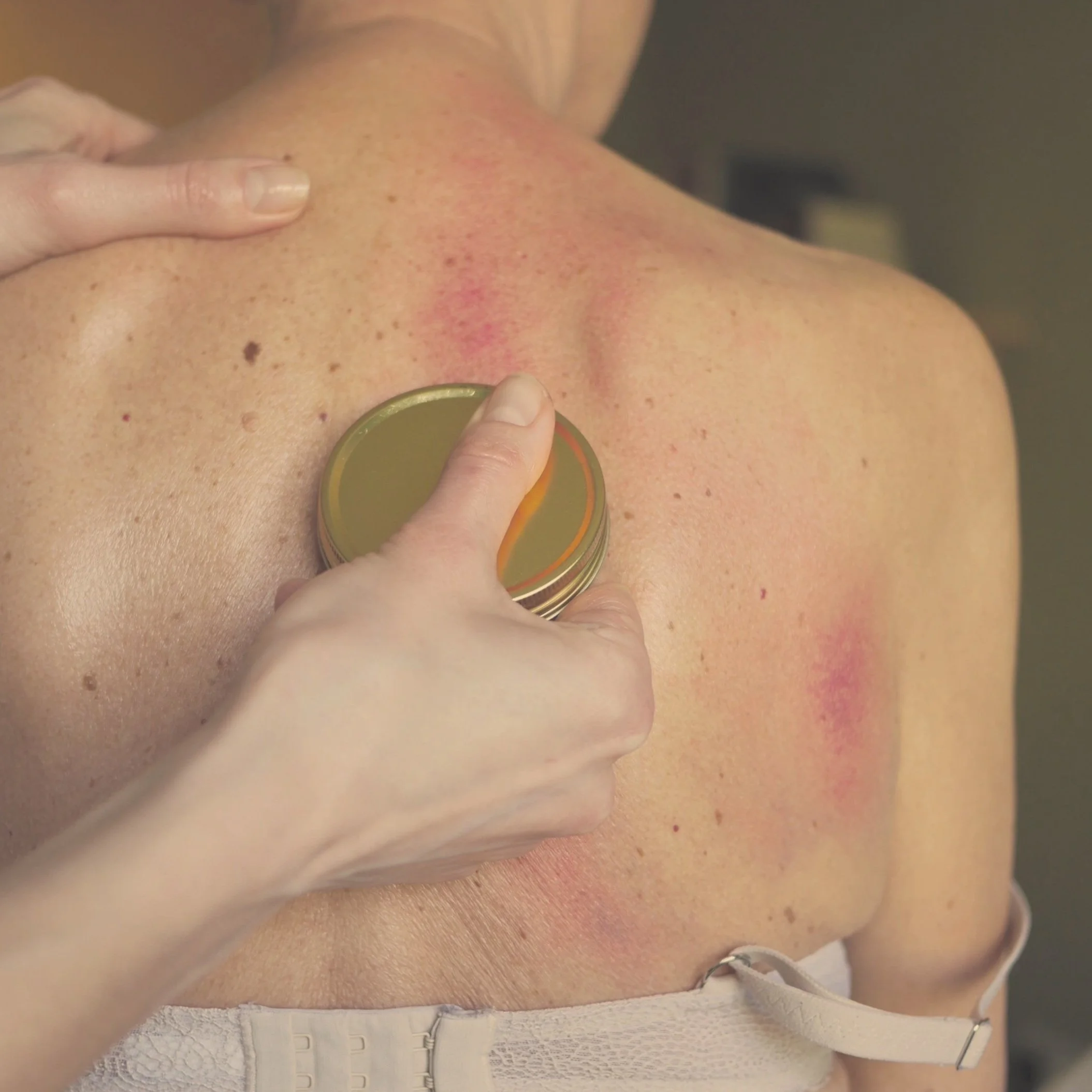
Traditionally, Gua Sha was practised within families and passed down through generations. Using a smooth-edged tool to stroke the skin, it stimulates microcirculation and releases stagnant Qi. This technique unblocks meridians, alleviates tension, reduces pain, improves immunity and supports overall health. The red petechiae produced by Gua Sha may look alarming but are a sign of stagnation being released, which is relieving rather than painful.
-
The TDP lamp, which stands for "Teding Diancibo Pu" (special electromagnetic spectrum), emits far-infrared heat and mineral-rich waves that penetrate deeply into the body. This helps relieve pain, reduce muscle tension and boost Yang energy, promoting overall health and recovery. Its unique mineral plate distinguishes it from regular infrared lamps, offering enhanced therapeutic effects.
-
Electro-acupuncture combines traditional acupuncture with gentle electrical stimulation. Small electrodes are attached to the inserted needles, delivering low-frequency currents to stimulate specific points and channels. This technique helps reduce pain and is used for a range of conditions, including reproductive health issues, musculoskeletal problems, and nerve pain, by regulating the flow of Qi and improving circulation.
-
The ear is a micro-map of the body, with specific points corresponding to various areas and organs. Auricular (or ear) acupuncture targets these points to regulate Qi and alleviate pain. It is commonly used for stress, emotional regulation, addiction recovery and detoxification.
-
Similar to auricular acupuncture, ear magnets stimulate specific points on the ear and are usually applied at the end of treatment. When used on other areas of the body, they are called acu-magnets. Worn for a few days, they can be removed at home and help extend the benefits of treatment.